How to Track Your Pregnancy Gestation Cycle
Finding out you are expecting a child is one of life's most momentous events. However, calculating the timeline of pregnancy can quickly become confusing with terms like LMP, gestational age, embryo transfer dates, and trimesters. Understanding how these calculations occur is the first step toward managing your prenatal care journey.
This guide breaks down how digital pregnancy calculators work, why your clinician tracks your pregnancy by weeks instead of months, and what to expect during each stage of baby development.
Why Pregnancy is Tracked by Weeks
Obstetricians and midwives universally measure pregnancy in weeks and days rather than calendar months. There are two primary clinical reasons for this:
- Calendar months vary in length: Months can be 28, 29, 30, or 31 days long. Tracking by weeks (which are always exactly 7 days) provides a consistent and standardized framework for medical record-keeping.
- Fetal milestones change rapidly: Critical development occurs in short windows. For example, the difference between Week 11 and Week 12 is massive (with vital organs forming and fingers separating), and tracking by weeks ensures these steps are matched correctly with clinical testing timelines.
Calculating Gestational Age vs. Conception Age
It is important to note that when your calculator tells you that you are 6 weeks pregnant, your baby has actually only been developing for about 4 weeks. Here is the reason for this discrepancy:
- Gestational Age: Measured from the first day of your Last Menstrual Period (LMP). Since you do not conceive until ovulation occurs (roughly 2 weeks after your period starts), the first 2 weeks of your gestational age represent the prep phase where your body prepares to release an egg.
- Conception Age (Fetal Age): Measured from the actual date of fertilization. This is the biological age of your baby, which is almost always 2 weeks shorter than the gestational age.
Because the exact day of ovulation and conception is hard to pinpoint without clinical monitoring, medical guidelines standardize all care on gestational age.
The Core Trimester Framework
Your 40-week pregnancy timeline is divided into three key blocks:
The First Trimester (Weeks 1 - 13)
During these initial weeks, your baby develops from a single fertilized cell (zygote) into a fully formed fetus. The heart starts beating around week 5 or 6. This is the period of organogenesis, making it a critical time to avoid harmful drugs, alcohol, and infections. Maternal symptoms include morning sickness, mood shifts, fatigue, and frequent urination.
The Second Trimester (Weeks 14 - 27)
Often referred to as the 'golden phase,' many mothers experience a surge of energy as nausea fades. Fetal organs mature, and you will begin to feel baby movements (known as quickening) between weeks 18 and 22. Your baby can now hear external sounds and begins to swallow amniotic fluid.
The Third Trimester (Weeks 28 - 40+)
Your baby focus shifts to rapid weight gain and lung maturation. As your belly grows, you may experience back pain, heartburn, swelling of the ankles, and Braxton Hicks contractions. Your baby is preparing to drop into the pelvic cavity for delivery.
Download Gynosakhi to Monitor Your Progress Daily
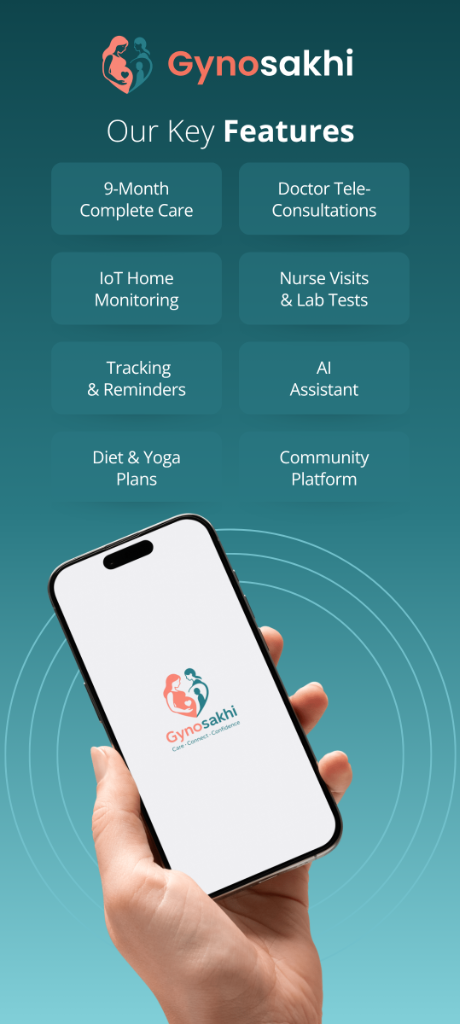
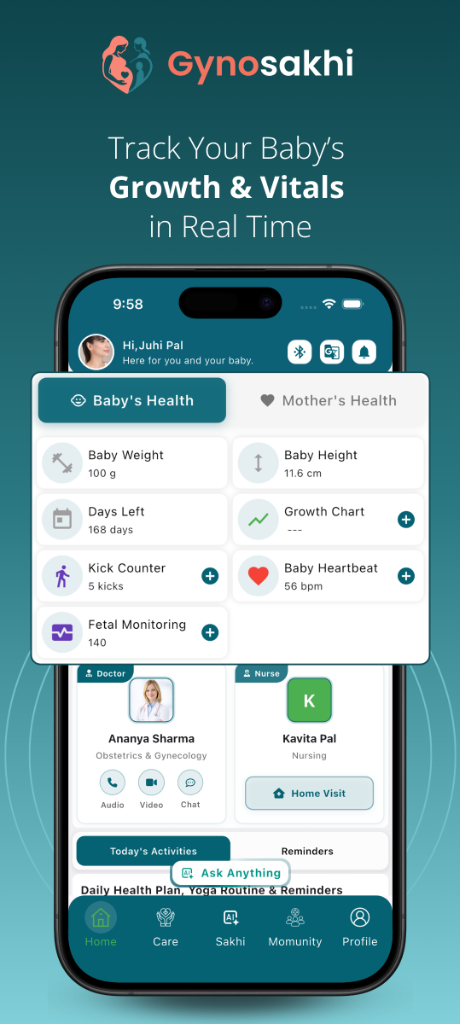
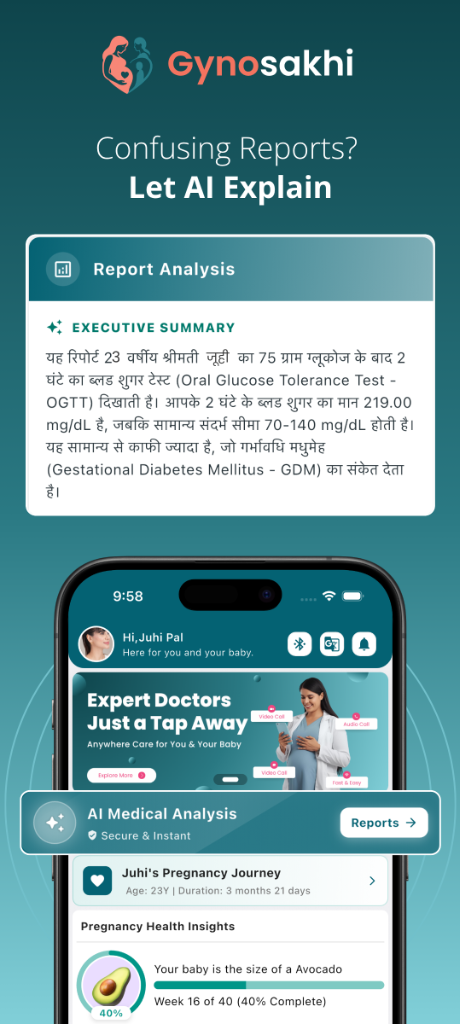
Our interactive calculator gives you a stellar overview, but your pregnancy develops day by day. To receive curated guidance, symptom logs, and stage-specific health recommendations, download our app Gynosakhi. Available on iOS and Android, it provides HIPAA-secure trackers and AI medical chatbot features to answer your queries around the clock.
Visual Learning Asset Guide
- Hero Image: An expectant mother examining a circular calendar dial illustration showing pregnancy weeks, holding a phone displaying Gynosakhi.
Prompt: Pastel tone illustration, an expecting mother looking at a circular pregnancy calendar widget, hand-held phone mockup with Gynosakhi interface, medical-feel, soft shadows. - Supporting Image 1: Fetal development stages diagram.
Prompt: Diagram showing development from cell division to blastocyst to embryo, clear clinical illustrations, labeled weeks 1-4, clean white background, pastel pink branding. - Supporting Image 2: Balanced pregnancy nutrition meal display.
Prompt: Top-down photo of a healthy pregnancy meal with dark leafy greens, avocado, wild salmon, and berries, bright natural lighting, professional food photography, healthy lifestyle. - Supporting Image 3: Prenatal checkup illustration.
Prompt: Approachable OB-GYN doctor showing a pregnant woman an ultrasound image on a screen, friendly atmosphere, vector illustration style, calm trust colors. - Infographic 1: Steps of Gestational Age Calculation.
Prompt: Vertical steps infographic showing: 1. Input LMP date, 2. Adjust cycle length, 3. Calculate gestational weeks, 4. Output EDD, clean vector cards, clear medical icons. - Infographic 2: First Trimester Milestone Checklists.
Prompt: List card infographic showing weeks 1-12 milestones: heart beating, facial features, fingernails, clean checkboxes, soft pink theme, Gynosakhi logo. - Comparison Graphic: Natural Conception vs IVF Transfer Math.
Prompt: Comparison grid graphic illustrating how due dates are computed via natural conception timelines vs IVF 5-day transfer offsets, clear bold formulas, pastel colors. - Timeline Graphic: Fetal Brain & Heart Milestones.
Prompt: Horizontal visual timeline highlighting key brain and heart developmental weeks, glowing neural connection icons, clean line design, professional medical graphic.
Get Daily Baby Developmental Milestones in Your Pocket
Download Gynosakhi to get 3D ultrasound visualizers, daily nutrition plans, and 24/7 AI obstetric assistance.