
How does a pregnancy calculator accurately track my due date?
A clinical pregnancy calculator predicts your estimated due date (EDD) by tracking your gestational age based on your Last Menstrual Period (LMP), conception date, or IVF embryo transfer date. According to the American College of Obstetricians and Gynecologists (ACOG) guidelines, calculating your exact gestational age is crucial because it helps obstetricians monitor fetal milestones week-by-week, schedule ultrasound scans, and prepare you for delivery.
By using the LMP, medical professionals include the two weeks prior to ovulation in your pregnancy timeline. This means that during Week 1 and Week 2 of your gestational age, you are not yet technically pregnant. Conception typically occurs around Week 2 or Week 3, depending on the length of your menstrual cycle.
How do doctors clinically calculate my due date?
Depending on your reproductive history and how you conceived, clinical professionals use one of three main calculation pathways inside a modern pregnancy calculator to establish your timeline:
- The Last Menstrual Period (LMP) Method: This standard method uses Naegele's Rule. It subtracts 3 months from your LMP, adds 7 days, and adds 1 year. While it assumes a 28-day cycle, Gynosakhi's digital algorithms automatically adjust this offset if your average cycle is shorter or longer.
- The Conception Date Method: If you tracked your ovulation (using LH strips or basal body temperature) and know your exact conception date, the calculator simply adds 266 days (38 weeks) to find your due date.
- The IVF Embryo Transfer Method: For IVF pregnancies, the due date is calculated using the embryo age at transfer. For a 3-Day embryo transfer, the calculator adds 263 days. For a 5-Day embryo transfer, it adds 261 days. This provides the most stable gestational timeline possible.
What are the 3 trimesters of pregnancy and what should I expect?
A full-term pregnancy is divided into three distinct phases called trimesters. Each phase brings unique developmental milestones for the baby and physical changes for the mother:
| Trimester | Gestational Weeks | Developmental Highlights | Common Maternal Symptoms |
|---|---|---|---|
| First Trimester | Week 1 to Week 13 | Organogenesis (formation of heart, brain, limbs); fetal heartbeat begins around week 6. | Nausea (morning sickness), extreme fatigue, tender breasts, frequent urination. |
| Second Trimester | Week 14 to Week 27 | Fetal movement (quickening); bones harden; hearing develops; hair and fingerprints form. | Energy returns, round ligament pain, skin pigment changes, nesting urges. |
| Third Trimester | Week 28 to Week 40+ | Rapid weight gain; lung maturation; baby drops into pelvic cavity; brain doubles in size. | Backaches, shortness of breath, pelvic pressure, Braxton Hicks contractions. |
Why is tracking pregnancy by weeks so critical?
Every week of pregnancy marks a critical phase of fetal development. For instance, corticosteroid administration is considered if there is a threat of preterm birth prior to week 34 to accelerate fetal lung development. Knowing your exact gestational age ensures that medical interventions and screening tests (like the anatomy scan) are scheduled at the perfect time.
How can Gynosakhi AI help me manage my pregnancy?
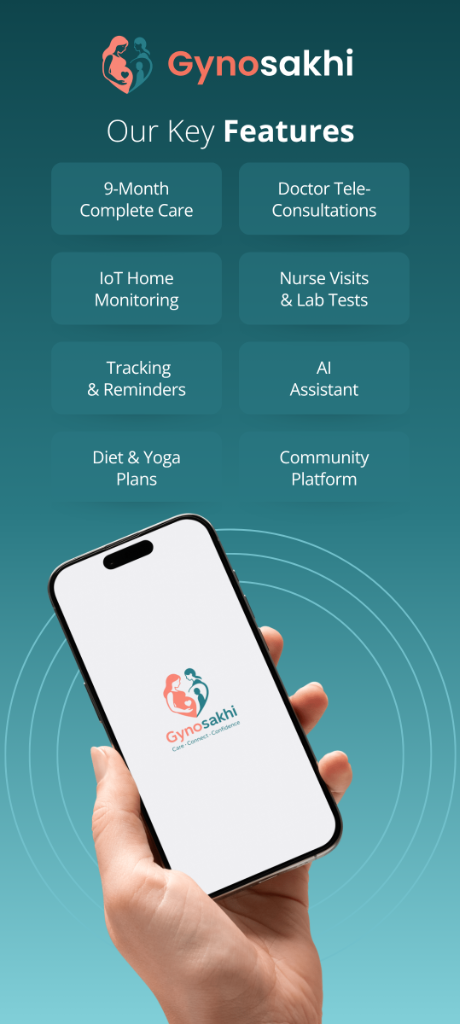
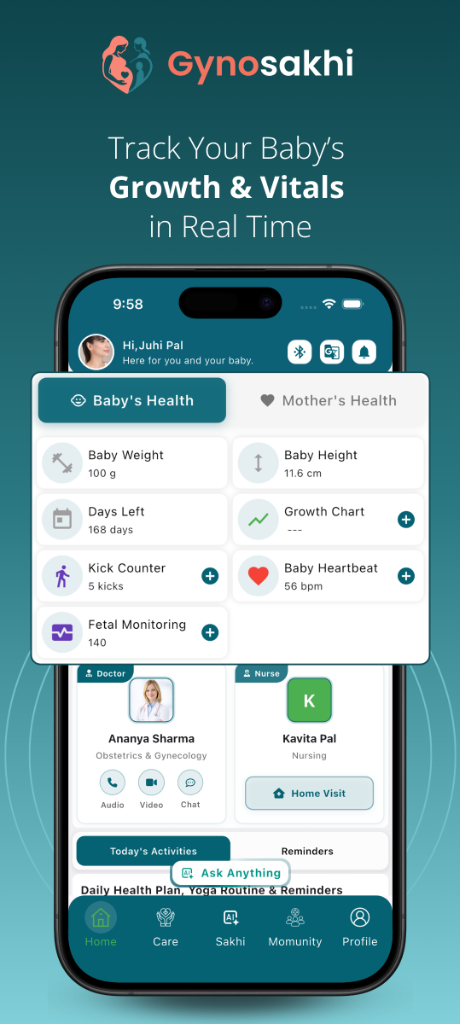
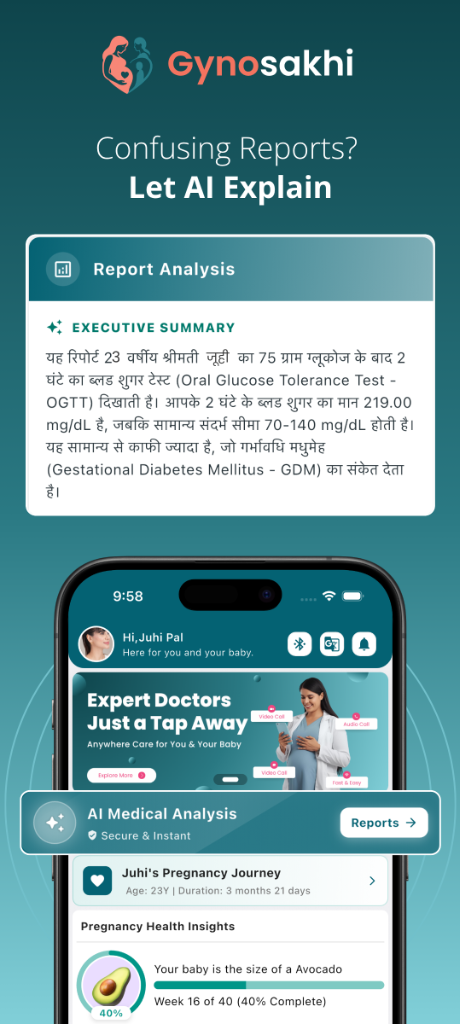
While calculating your due date is the first step, managing your pregnancy requires daily attention. Gynosakhi acts as your 24/7 comprehensive maternity companion. By downloading the Gynosakhi app on iOS or Android, you get instant access to:
- 24/7 AI Doctor Chatbot: Ask questions about symptom management, safe medications, and nutrition at any time.
- Interactive Kick Counter: Record baby movements easily in the third trimester to verify fetal well-being.
- Stage-Specific Meal Plans: Access high-protein, folate-rich recipes designed specifically for your current gestational week.
Connect your pregnancy calculator results with Gynosakhi today to ensure a healthy, monitored, and stress-free maternity journey.
Visual Learning: Image & Graphic Asset Guide
Below is the detailed visual layout plan mapped out for this resource to enhance user understanding and SEO topical authority. All assets are branded with Gynosakhi guidelines:
- Hero Image: A professional, warm illustration of an expecting mother looking at a glowing timeline, showcasing a hand holding a phone running the Gynosakhi app.
Nano Banana Prompt:Warm lighting, cozy atmosphere, expecting pregnant woman looking at her phone displaying Gynosakhi app, circular pastel pink glowing timeline overlay, clean modern illustration style, soft medical look. - Supporting Image 1 (First Trimester Development): Embryo development at 8 weeks.
Prompt:Detailed medical illustration of a human embryo at 8 weeks, size comparison to a raspberry, soft pastel pink background, clean, anatomical but approachable, Gynosakhi brand logo in corner. - Supporting Image 2 (Second Trimester Vitality): Mother doing light prenatal yoga.
Prompt:Expectant mother in her second trimester practicing gentle prenatal yoga on a soft sage green mat, bright natural lighting, serene atmosphere, realistic modern photo, healthy lifestyle. - Supporting Image 3 (Third Trimester Nesting): Preparing the baby nursery.
Prompt:Parents organizing a nursery room, warm natural light, folding soft baby clothes, minimalist Scandinavian nursery design, soft warm aesthetic, high-fidelity photo. - Infographic 1 (Due Date Calculation Methods): Visual comparison flowchart showing LMP, Conception, and IVF calculation pathways.
Prompt:Flowchart graphic comparing LMP calculation, Conception date calculation, and IVF 3-day/5-day transfer due date rules, clean text blocks, pastel sage green and dusty rose boxes, modern typography. - Infographic 2 (Fetal Size Milestones): Chart showing baby size fruit analogies from seed to pumpkin.
Prompt:Infographic listing pregnancy weeks 4, 12, 20, 28, 40 with corresponding fruit illustrations poppy seed, plum, banana, eggplant, pumpkin, clean vertical layout, pastel HSL colors. - Comparison Graphic (Gestational vs Conception Age): A double-timeline comparison illustrating why gestational age starts 2 weeks prior to fertilization.
Prompt:Comparative timeline layout, top timeline labeled Gestational Age starting at LMP, bottom timeline labeled Conception Age starting at fertilization day 14, visual overlay showing the 2-week shift, soft grid background, highly educational. - Timeline Graphic (Full Pregnancy Trimester Milestones): Horizontal overview scroll showing weeks 1-40, demarcating trimesters and screening tests.
Prompt:Horizontal pregnancy timeline graphic, weeks 1 to 40, labeled First Trimester, Second Trimester, Third Trimester, milestones markers for dating scan, anatomy scan, glucose test, soft gradients.
Get Daily Baby Developmental Milestones in Your Pocket
Download Gynosakhi to get 3D ultrasound visualizers, daily nutrition plans, and 24/7 AI obstetric assistance.