Understanding Gestational Age in Clinical Pregnancy
When you visit your obstetrician, the primary metric they use to evaluate your pregnancy is your gestational age. This is the official age of your pregnancy in weeks and days. It dictates everything from when scans are performed to whether baby weight is on track. Knowing how to calculate and interpret your gestational age is key to participating in your prenatal care.
This article details how gestational age is calculated, why it differs from fetal age, and how it guides medical checkups throughout your pregnancy.
How Gestational Age is Calculated
Gestational age is calculated based on the first day of your Last Menstrual Period (LMP). To calculate your gestational age today:
- Count the number of days that have elapsed since the first day of your last period.
- Divide the total number of days by 7.
- The quotient represents your gestational weeks, and the remainder represents your days.
For example, if 73 days have elapsed since your last period: 73 divided by 7 is 10 with a remainder of 3. Your gestational age is 10 weeks and 3 days. Our calculator widget above does this math automatically, adjusting for cycle variations.
Gestational Age vs. Fetal (Conception) Age
It is important to understand that gestational age does not measure the actual age of the baby. Instead, it measures the age of the pregnancy cycle. The baby's actual biological age is called fetal age or conception age:
| Feature | Gestational Age | Fetal (Conception) Age |
|---|
| Starting Point | First day of last menstrual period (LMP) | Date of conception/fertilization |
| Duration | Standard 40 weeks (280 days) | Standard 38 weeks (266 days) |
| Who Uses It | Obstetricians, midwives, medical records | Researchers, developmental biologists |
| Difference | Always roughly 2 weeks longer | Always roughly 2 weeks shorter |
Because the exact day of ovulation is variable, medical professionals standardize care on gestational age to maintain a consistent baseline.
How Gestational Age Guides Your Prenatal Care
Your gestational age determines when you will receive key prenatal screenings and procedures:
- Weeks 8 - 12: Dating ultrasound scan to verify gestational age and check the fetal heartbeat.
- Weeks 11 - 13: NIPT (Non-Invasive Prenatal Testing) and nuchal translucency scan to check for genetic conditions.
- Weeks 18 - 22: Mid-pregnancy anatomy scan (anomaly scan) to check baby's physical development.
- Weeks 24 - 28: Glucose screening test for gestational diabetes.
- Weeks 35 - 37: Group B Strep (GBS) screening.
Keep Up Daily with Gynosakhi
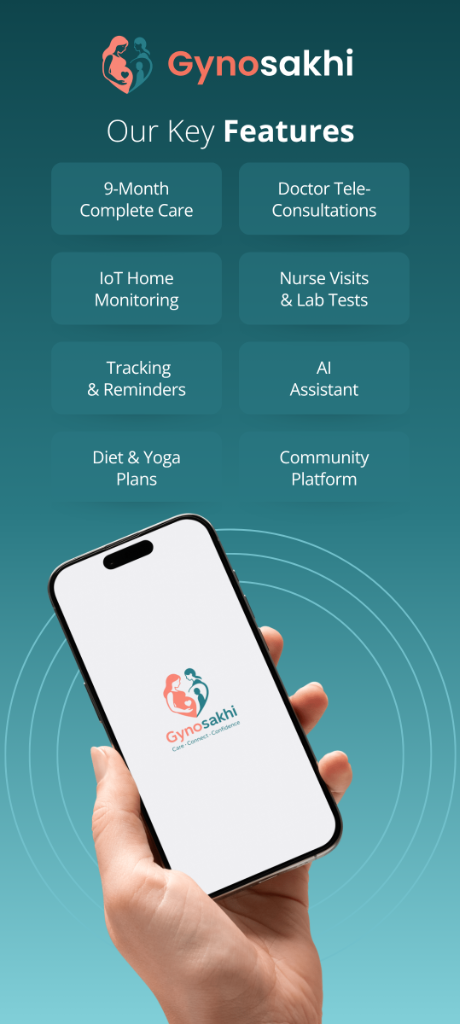
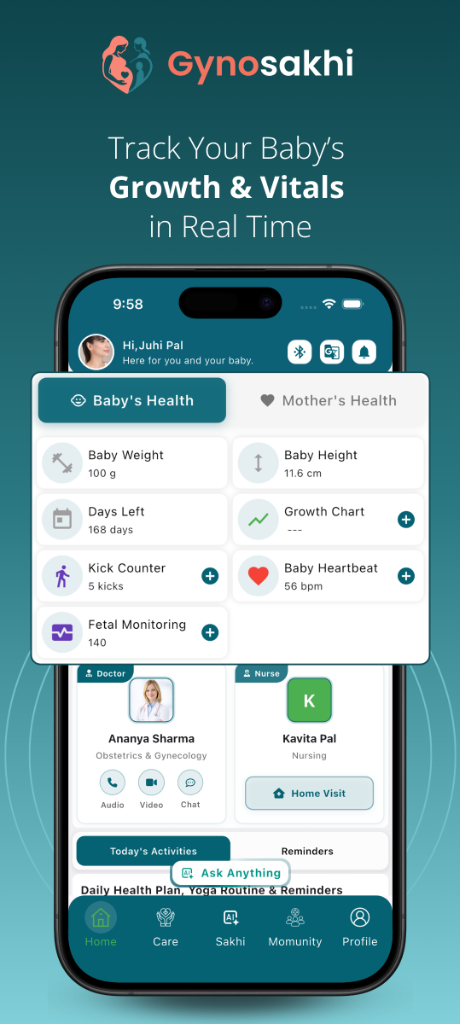
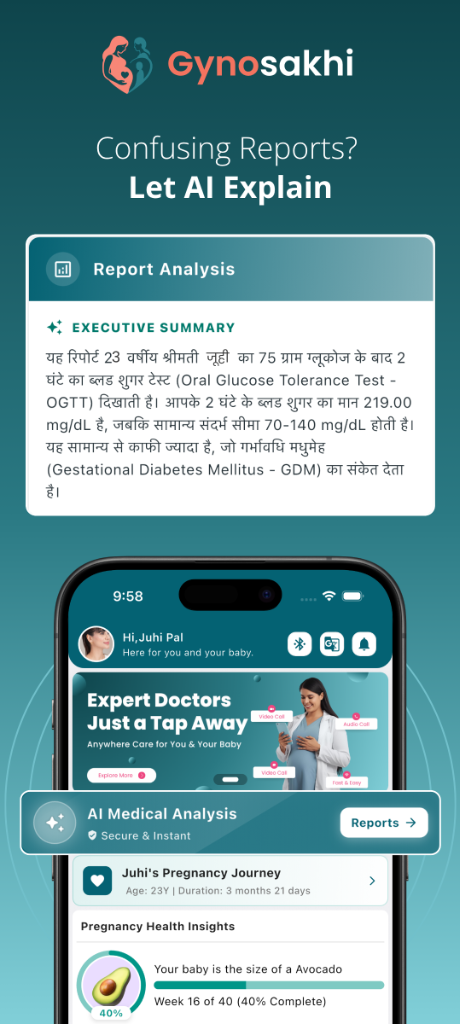
Monitoring your gestational progress is easy with our Gynosakhi companion application. Get daily updates on your baby's development, track your maternal symptoms, log doctor appointments, and consult our 24/7 AI chatbot for any health questions. Download Gynosakhi on iOS and Android today.
Clinical Disclaimer: The calculations, timelines, and guides provided on this page are for educational and planning purposes only. They are based on clinical standards from ACOG, but do not replace professional medical advice, diagnosis, or clinical ultrasound assessments from your OB-GYN.
Get Daily Baby Developmental Milestones in Your Pocket
Download Gynosakhi to get 3D ultrasound visualizers, daily nutrition plans, and 24/7 AI obstetric assistance.