How Many Weeks Pregnant Am I?
Empowering mothers with precise, clinical-grade pregnancy timelines and growth tracking. Sync your dates instantly to our Gynosakhi App for AI-driven obstetric care.
Find out your estimated due date, current gestational age, and baby size.
Our pregnancy algorithms, trimester calculations, and health insights are constructed based on peer-reviewed clinical guidelines and approved by certified medical practitioners.
Calculations adhere to standard clinical guidelines set by the American College of Obstetricians and Gynecologists.
All symptom data, logs, and profile records inside our applications are encrypted and kept strictly confidential.
Medical resources are written and periodically updated by an expert board of OB-GYNs and child care advisors.
See how expecting parents use our calculators and Gynosakhi AI daily to support their pregnancy milestones.
"The gestational calculator gave me the exact due date that my OB-GYN later confirmed. Using the Gynosakhi app is like having a physician in the family — I get answers in seconds whenever I'm anxious."
"I track my weeks with the timeline widget on this site and read the week-by-week guides constantly. The app's AI chatbot is amazing at listing which medications are safe during the first trimester."
"Best IVF calculator out there. The 3-day and 5-day transfer inputs are accurate down to the day. Syncing the dates into Gynosakhi was extremely smooth!"
Our interactive gestational calculator helps you determine which week of pregnancy you are in today. Understanding your weekly progress is key to tracking fetal development and preparing for your child's birth.
While calendar months vary, pregnancy is often described as lasting 10 lunar months (each exactly 4 weeks long). For instance, weeks 1 to 4 make up month 1, weeks 5 to 8 make up month 2, and weeks 37 to 40 complete month 10. This explains why a 40-week pregnancy equals roughly 9 calendar months.
Tracking your pregnancy by weeks instead of months is a clinical standard. Fetal development moves rapidly in short periods. A difference of a single week determines whether a specific screening scan can be performed or whether certain medications can be safely prescribed.
Sync your calculations with the Gynosakhi app to get daily baby size comparisons, track your health metrics, and chat with AI Doctor assistants anytime.
Clinical Disclaimer: The calculations, timelines, and guides provided on this page are for educational and planning purposes only. They are based on clinical standards from ACOG, but do not replace professional medical advice, diagnosis, or clinical ultrasound assessments from your OB-GYN.
Download Gynosakhi to get 3D ultrasound visualizers, daily nutrition plans, and 24/7 AI obstetric assistance.
More than just a calculator. A comprehensive 24/7 medical support system for your entire maternity journey.
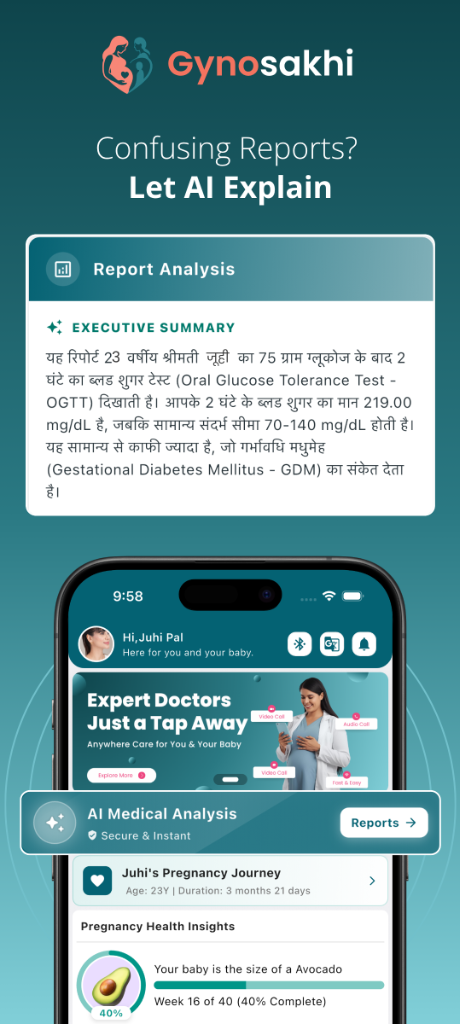
Get instant, medically-reviewed answers to all your pregnancy, diet, and lifestyle questions, anytime day or night.
Tailored meal plans depending on your gestational stage, symptoms, cravings, and nutritional requirements.
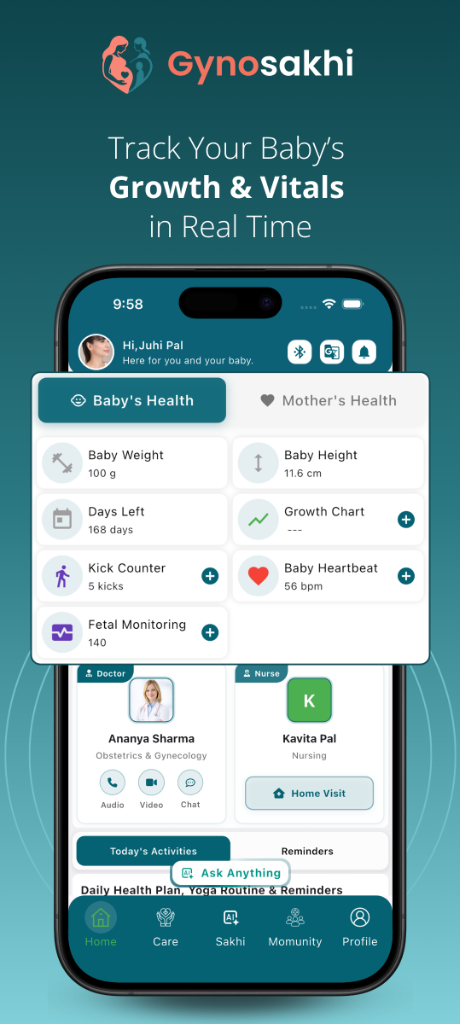
Record daily symptoms and monitor baby movement patterns. Generate clinical reports to share with your obstetrician.
Track your baby's growth, get clinical reports analyzed by advanced Medical AI, log symptoms, count kicks, and consult expert OB-GYNs. Download our free, HIPAA-secure app today.
Medical answers to standard queries regarding pregnancy calculations, due dates, and trimester guidelines.
You can calculate your pregnancy weeks by counting the number of days elapsed since the first day of your Last Menstrual Period (LMP) and dividing by 7. The quotient is your current week of pregnancy.
Yes, early detection pregnancy tests can show a positive result as early as 3 weeks and 4 days of gestational age, which is roughly 9 to 12 days after conception.
During the 4th week, the blastocyst implants into the uterine wall. The placenta and amniotic sac start forming, and early pregnancy hormones (hCG) begin to rise, making home pregnancy tests positive.
If you conceived exactly 4 weeks ago, you are clinically considered 6 weeks pregnant. This is because gestational age is measured from the first day of your last period, which is typically 2 weeks before conception.
Pregnancy is divided into three key blocks: First Trimester (weeks 1 to 13), Second Trimester (weeks 14 to 27), and Third Trimester (weeks 28 to 40+).
Because the exact day of ovulation and conception is hard to determine without laboratory monitoring, clinical guidelines standardize all pregnancy calculations starting from the last period (LMP), which is a clear and memorable date.
A 40-week pregnancy equals exactly 10 lunar months (each containing 4 weeks), which is roughly equivalent to 9 calendar months and 7 days. This explains the discrepancy when talking about weeks versus months.
If you have a longer menstrual cycle (e.g., 34 days), your ovulation happened later than the standard day 14. Our calculator adjusts for this delay, subtracting the offset from your gestational weeks to ensure accurate timing.
A baby's heart begins to beat around week 5 or 6 of pregnancy. It is usually clearly visible on a transvaginal ultrasound scan by week 6 or 7.
Once you enter your due date or LMP in this calculator, you can download the Gynosakhi app. Enter your timeline in your profile, and the app will unlock weekly guides, symptom trackers, and 3D fetal models.